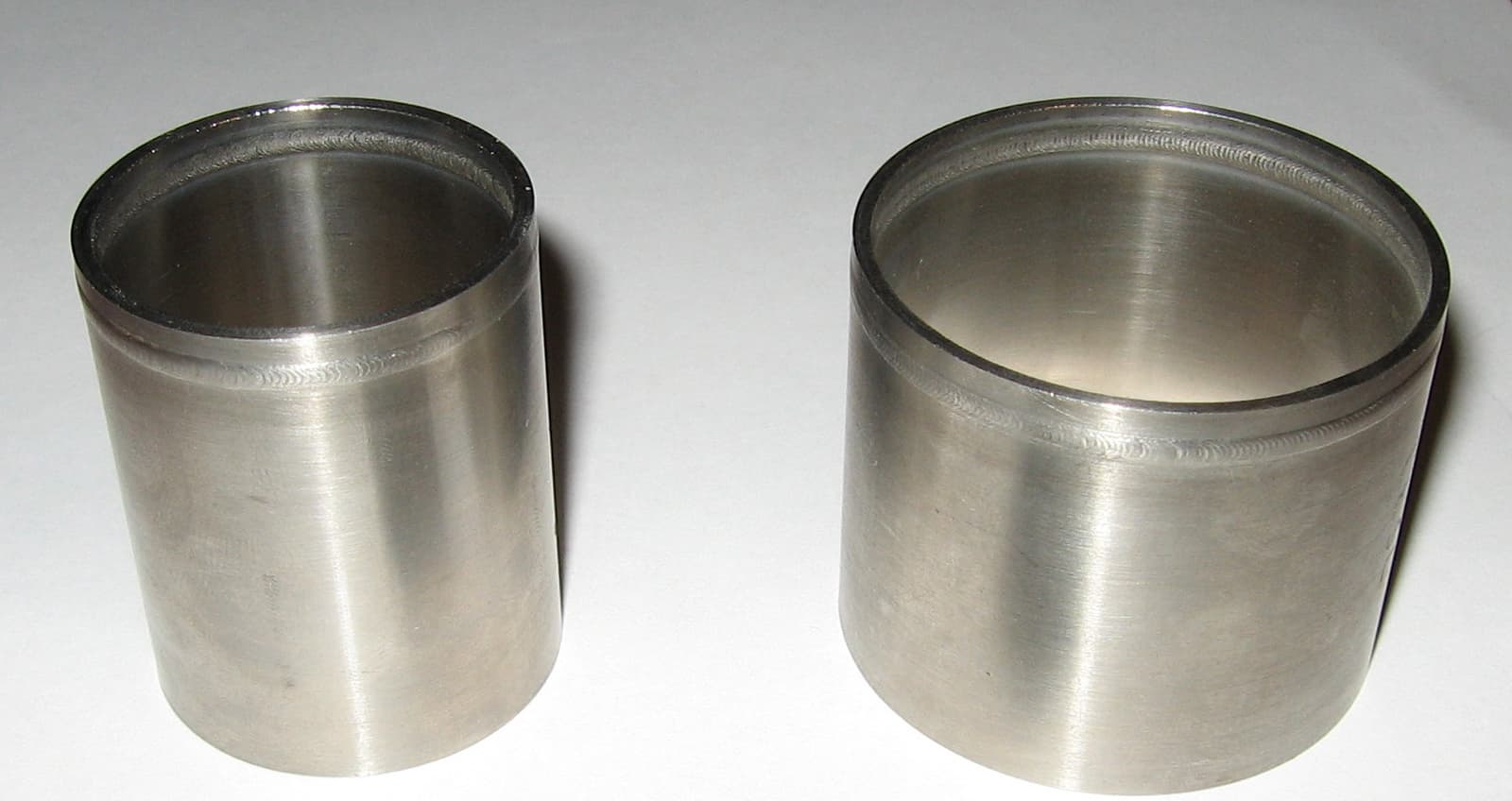

The 2014 Alltrade homepage split round hollow pipe from round hollow tube. That split is not pedantry. Pipe is a nominal-bore, schedule-wall product built for fluids. Tube is an outside-diameter, wall-thickness product built for structures, furniture, balustrades and food plant. Australian merchants still bin them separately. Mixing the words is how a 50.8 mm polished handrail becomes a rusty NB50 leftover from a plumber’s truck.
This is the decoder. Decorative posts and glass-slot rails live in 316 stainless balustrades in Australia. Square cousins live in stainless steel square hollow tube. Solid cousins live in stainless steel round bar.
Two measurement systems that refuse to be friends
| Tube | Pipe | |
|---|---|---|
| What you write first | Outside diameter (OD) | Nominal bore (NB) or NPS |
| Second number | Wall thickness in millimetres | Schedule (10S, 40S) or a wall |
| Typical Australian rail | 38.1, 42.4, 50.8, 63.5 mm OD | Almost never |
| Typical process line | Sanitary OD tube | NB15–NB100 316L pipe |
| Finish language | Polished, satin, mill, slotted | Pickled, mill, sometimes polished |
| Pressure rating | Not unless it is a specified tube spec | The point of the product |
A 50.8 × 1.6 mm tube is a 2-inch-ish outside diameter with a 1.6 mm wall. A 50 mm NB schedule 40 pipe has a different OD and a much fatter wall. They will not share elbows, they will not share glass slots, and they will not share a polish.
Australian balustrade culture speaks in millimetre OD because the glass, the saddle and the base plate are all drawn around that number. Process plant speaks in NB because a valve and a weld-neck flange are drawn around the bore. The old custom-cut site sold both because Melbourne jobs include both a café rail and a dairy line. It did not sell them as synonyms.
Grades and the hollow’s seam
Most trade tube and pipe in this country is 304/304L or 316/316L, the same family as 304 versus 316. Welded tube has a longitudinal seam. Seamless pipe or tube exists and costs more. For a handrail, a good welded tube with a dressed seam is normal. For a pressure line, the specification — not a journal — names welded versus seamless.
Site welding still wants the L suffix. A hollow concentrates heat. An uncleaned tint on a thin wall becomes a brown ring faster than the same tint on a bench. Welding 304 and 316 stainless and passivation after fabrication apply to tube exactly as they apply to sheet.
Coastal and pool work wants 316L tube and A4 fasteners. A 304 tube with a 316 story is how a balcony photographs brown in March. Tea staining does not care that the section was hollow.
Sanitary tube — food, dairy, brewery — is a third conversation. It is still a tube (OD and wall), but the ID finish, the ovality and the weld quality are specified because product touches the inside. “Food grade pipe” on a quote is not a specification. Read food-grade stainless steel in Australia and then name a tube spec.
Balustrade tube is a product, not a leftover pipe
The archived shop sold polished 316 balustrade tube, slotted and unslotted. That product is:
- a stated OD (often 38.1, 42.4, 50.8 mm)
- a stated wall (1.2, 1.6, 2.0 mm are common trade walls)
- a stated finish (mirror or satin)
- a slot for glass if the system is a glass balustrade
- a matching saddle, joiner or base
It is not a structural certificate. A 50.8 mm tube is not a tested barrier because it is shiny. Australian barrier design is a design job. This journal will not pretend otherwise. What we will say is that the hollow you buy has to match the fittings you already hold, and that 316 with drainage and a wash still stains if you skip coastal care.
Slotted tube has a kerf. The slot width and the glass thickness are a pair. A “close enough” slot from a saw is how glass rattles or chips. If you are custom-cutting a slot on site, you are no longer in merchant-tube territory; you are fabricating. Protect the finish during install.
Pipe on a stainless job
Pipe earns its keep on:
- water and process lines
- heat-exchange and plant rooms
- anything that must meet a flange table
Write 316L, the NB, the schedule, the end (plain, bevel, threaded), and whether you need fittings in the same heat-family. Do not polish a schedule-40 pipe and call it a handrail unless the designer asked for that mass. It will look like a plumbing leftover, because it is one.
Threaded pipe in stainless is a special annoyance: threads are crevices, and crevices love chlorides. Tape, dope and a wash are not optional outdoors. Pool and marine fittings covers the hardware that lives in worse water than a kitchen.
Cut, weld, and the inside you cannot see
Custom-cut hollows need a length and a square end. A cold saw is kinder than a grinder. Swarf left inside a tube is a rust factory: it sits in the dark, stays wet, and bleeds brown at every drain hole. Blow the tube out. Pickle the cut. Do not store hollows upright in a wet yard with carbon-steel offcuts dropped down the bore.
Orbital welds on sanitary tube exist because a hand TIG on a thin wall is hard to keep pretty on the inside. If the inside is a food contact surface, the inside is the specification. If the inside is a handrail, you still do not want a burnt crumb that will rattle out at handover.
How to write the order so the truck is right
Balustrade: “316L welded tube, 50.8 mm OD × 1.6 mm wall, satin polish, unslotted, cut 8 lengths at 1020 mm, mill cert, ends square, blow out, no pipe.”
Sanitary: “316L tube, 38.1 mm OD × 1.6 mm, specified ID finish, orbital-weldable, mill cert.”
Process: “316L pipe, NB25, Sch 10S, plain end, pickled, mill cert, matching elbows.”
If the hollow is square, you want square hollow tube. If the job is still choosing metal rather than section, return to grades and alloys and custom-cut stainless and sections.
The old site was right to list pipe and tube as two lines. Keep them as two lines. OD is not NB. A polish is not a pressure rating. 316 is not a boat. Write the hollow you mean.