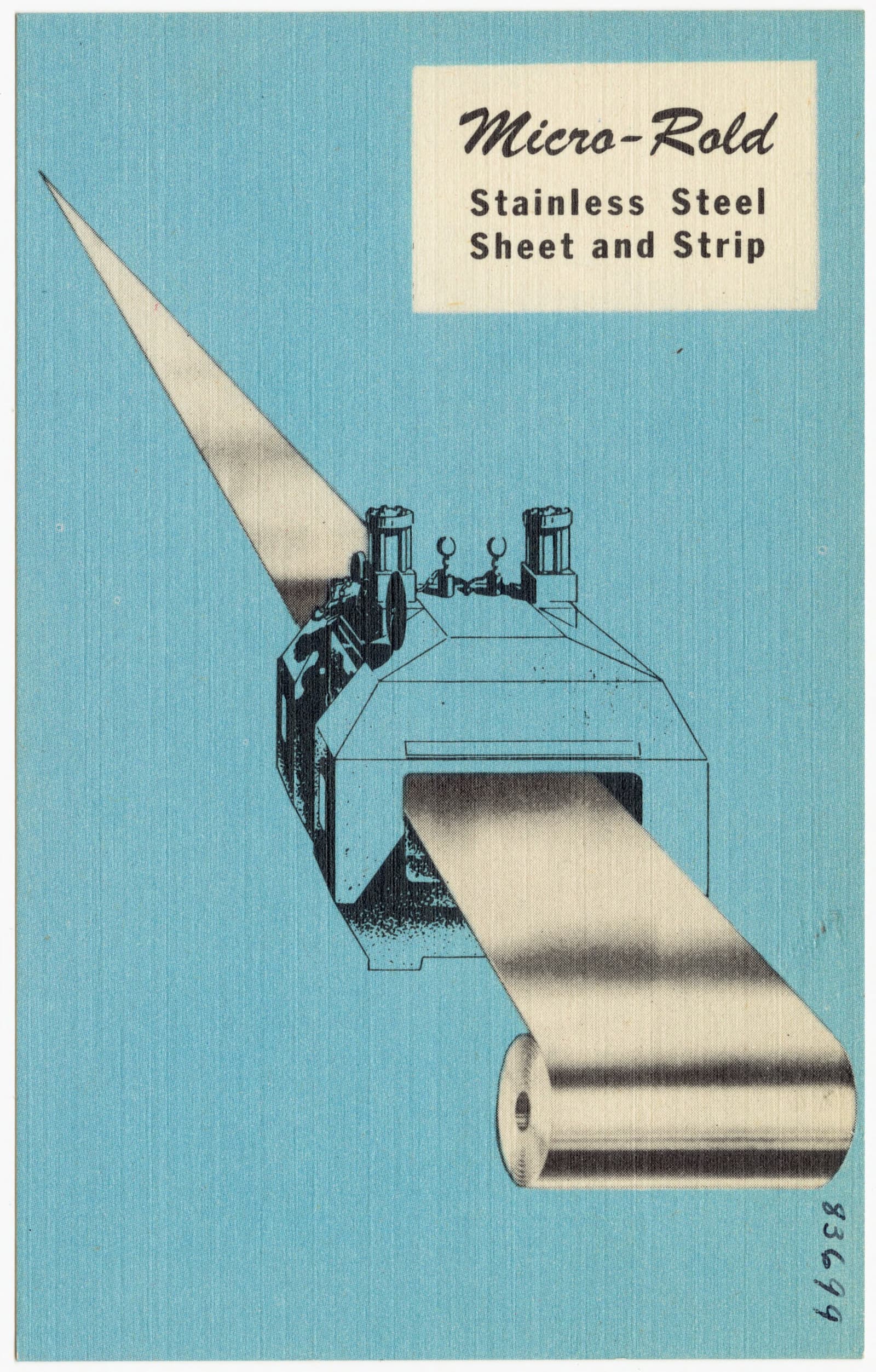

The archived Alltrade catalogue treated finish as a first-class option, not a cosmetic afterthought: No. 2B as the unfinished mill product, No. 4 as the brushed kitchen standard, No. 8 as the near-mirror, and bright annealed as the cloudy cousin of a polish. Heavy sections arrived in HRAP — hot-rolled, annealed and pickled — which looks dull because it is supposed to.
Australian sheet still arrives in those languages, plus PVC film that someone will peel too early on a dusty site. Stainless steel finishes explained is the decoder. Brushed versus polished stainless steel is the kitchen argument. For the truck, use stainless steel sheet sizes in Australia and the stainless steel thickness chart in millimetres. Film, paper and handling sit in protecting stainless steel during install.
Plate and sheet are not the same order. Once the thickness climbs and the mill process changes, you are no longer talking about a 2400 × 1200 kitchen blank. Say the millimetre thickness out loud. Gauge numbers still float around imported literature; Australian trade counters think in millimetres.
The custom-cut stainless and sections hub is the next door if the sheet has to become an angle, a tray or a barbecue lid.