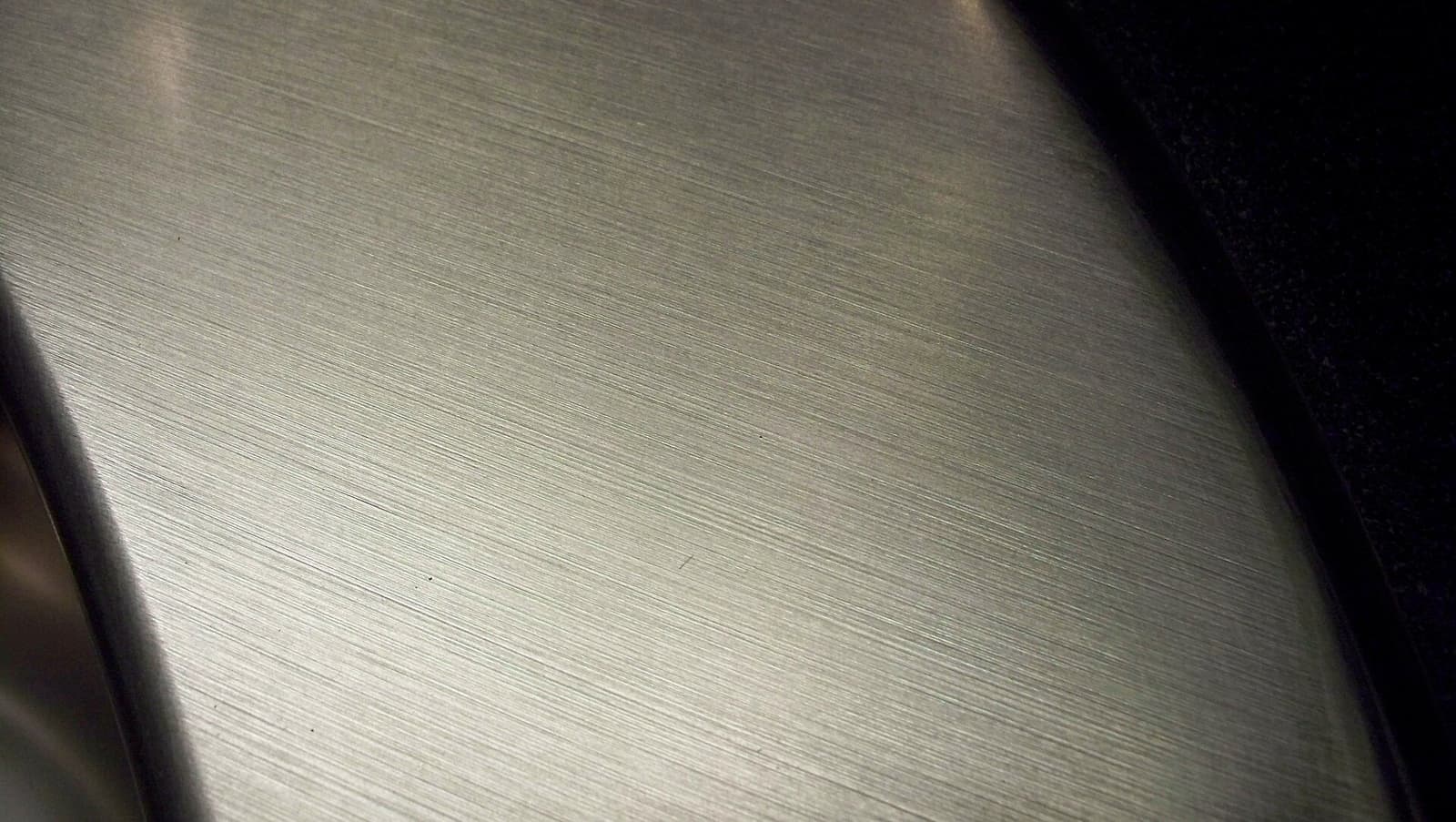

The old Alltrade catalogue had a blunt line about 430: it is magnetic, which does not mean the steel is itself a magnet — it means a magnet will stick. That sentence was doing public education in a product description, and it is still the most useful thing you can say about this alloy in an Australian warehouse.
430 is a ferritic stainless. Chromium does the rust-resisting. Nickel is mostly absent, which is why 430 is cheaper than 304 when nickel prices spike, and why it behaves differently in the folder and under the TIG torch. It is the alloy inside a lot of whitegoods, indoor trim, and budget sinks. It is not the alloy you put on a coastal balustrade and walk away. This journal does not sell or cut the sheet. It names the family so a fabricator or installer can stop treating “stainless” as one metal.
If the magnet is the only tool on site, read how to identify a stainless steel grade before you condemn a sink or bless a post. The grades and alloys hub maps the rest of the family.
What 430 is made of
Typical 430 (UNS S43000, often EN 1.4016) carries about 16–18% chromium and very little nickel. Atlas Steels grade data and the ASSDA library treat it as a ferritic: body-centred cubic, magnetic in the annealed condition, modest formability, a corrosion ceiling well below the austenitics. 304 and 316, being austenitic, usually are not magnetic — until cold work confuses the picture. That is why the magnet is a first question, not a verdict.
Corrosion resistance is real compared with carbon steel. It is modest compared with 304, and poor compared with 316 in chlorides. Pitting and tea staining arrive faster. A suburban inland laundry can live with 430. A beach shower cannot. Australian coastal chlorides do not need a laboratory coupon to prove the point: salt film, overnight wetness, and a horizontal ledge will find the gap.
430 is not a low-carbon austenitic. You do not buy an “L” suffix and assume weldability matches 304L. Stabilised ferritic cousins exist; they are not what a Melbourne merchant means when the docket just says 430.
| Alloy | Structure | Nickel | Typical Australian honesty |
|---|---|---|---|
| 430 | Ferritic | Essentially none | Indoor appliances, trim, painted substrate |
| 304 / 304L | Austenitic | About 8% | Kitchen benches, indoor wet rooms |
| 316 / 316L | Austenitic | About 10%, plus molybdenum | Coastal, pool, marine-atmosphere work |
That table is the whole purchasing argument. The 304 versus 316 essay decides between the two austenitics. This page decides whether you are even in that family.
Where Australian trades still use it
- Indoor appliance skins and some sink bowls that were designed around it.
- Trim, kickplates and decorative indoor sheet where the budget is the brief.
- Parts that will be painted or powder-coated, so the stainless is a substrate rather than a finish.
- Magnetic separators and fixtures that need a magnet to grab.
If the job is a stainless steel benchtop that will be welded, wet, and photographed, 304 is the grown-up default — see food-grade stainless in Australia. If the job is a 316 balcony, 430 is a defect waiting for a lawyer.
Historic Melbourne custom-cut counters stocked 304, 316 and 430 because those were the three sheets a trade buyer actually named. 430 was never the coastal line. It was the indoor, magnetic, cheaper ferritic. That split has not aged out.
Australian duty: indoor, food, coast
Indoor
This is 430’s honest country. Dry interiors, appliance skins, kickplates behind a stove that never sees a hose, a laundry cabinet in a western-suburbs house. The finish is often a bright domestic polish rather than an architectural No. 4. Ask to see the sheet. Finishes explained still applies: a rough polish holds cleaner residue and looks worse faster.
Food plant and kitchens
430 appears in some whitegoods and imported appliance bowls. Food plant engineers still write 304 or 316 for welded wet benches, because cleanability, weld procedure and chloride washdown sit above a magnet-friendly skin. Do not “upgrade” a designed 430 toaster panel to 304 for sport. Do not downgrade a dairy table to 430 to win a price. The duty is the specification.
Coast and outdoors
Australian marine atmospheres punish ferritics. Chloride films sit on unwashed faces. 430 has no nickel cushion and no molybdenum. It is not marine-grade by any trade meaning of that nickname. Even inland outdoor work is a stretch unless the part is painted, sheltered, and accepted as a consumable. For outdoor rails and pool surrounds, stay on the marine, balustrade and outdoors path: 316L, A4 fasteners, and a wash programme.
Fabrication habits that differ
430 does not work-harden the way 304 does, which can make forming friendlier. Springback is different. The sheet can feel “softer” in a folder and then surprise you with grain growth if you heat it like an austenitic.
Welding is the catch. Ferritics grow grains in the heat-affected zone and can become brittle if you treat them like austenitics. If you must weld 430, you need a procedure written for it — not a 308 filler and hope. The welding 304 and 316 essay is not a 430 manual; do not pretend it is. Heat tint still wants dressing and passivation on anything that will see moisture.
Cutting and grinding share the usual stainless rule: dedicated abrasives, no carbon-steel swarf left in the polish. Ferritic or not, embedded iron rusts and then the client photographs “fake stainless.”
Failure modes you will actually see
Outdoor pitting. A 430 panel used as an outdoor kitchen skin in a coastal suburb will stain, pit, and look like a complaint. The alloy was never the brief.
Sold as 304. A magnet sticks hard to a “non-magnetic food bench.” That is either 430 or a heavily cold-worked austenitic. Paperwork settles it. Guessing settles a dispute in the wrong direction.
Weld brittleness. A shop that TIG’d 430 like 304, no procedure, no filler discipline, then folded the assembly. The crack is a metallurgy lesson, not a mystery.
Finish mismatch. A bright domestic 430 next to a No. 4 304 splashback. Same kitchen, two metals, one photograph that looks like a patch.
Mixed fasteners. Zinc or carbon screws through a 430 skin in a wet laundry. The brown halo is galvanic and contamination, not proof the sheet was carbon steel.
Specification language and how to order
Write the number. “430, 0.7 mm, bright annealed or specified polish, indoor appliance skin, not for welding unless procedure supplied.” That sentence is more honest than “stainless, magnetic is fine.”
Purchase orders should already refuse the adjectives. If a buyer wrote marine grade or food grade, send them back to the essays that decode those stickers. If a merchant can only say “ferritic, cheaper,” ask for UNS S43000 or a named 430 on the docket and a mill certificate with a heat number.
Keep 430 off a 316 job. Mixed systems create documentation messes and galvanic surprises. If the rest of the job is 304, say so on the rack label so the offcut does not become a coastal post next year.
The honesty test
430 is not fake stainless. It is a different family. The fraud, when it happens, is selling 430 as 304 to a client who asked for a non-magnetic food bench. Stamp the purchase order. Keep the certificate. If a magnet sticks hard to a “316 marine post,” you are not holding 316. Test before you shout.
For the coastal versus kitchen split, return to 304 versus 316 in Australia. For seawater or chloride-cracking duty, duplex versus 316 is the escalation, not a brighter 430.