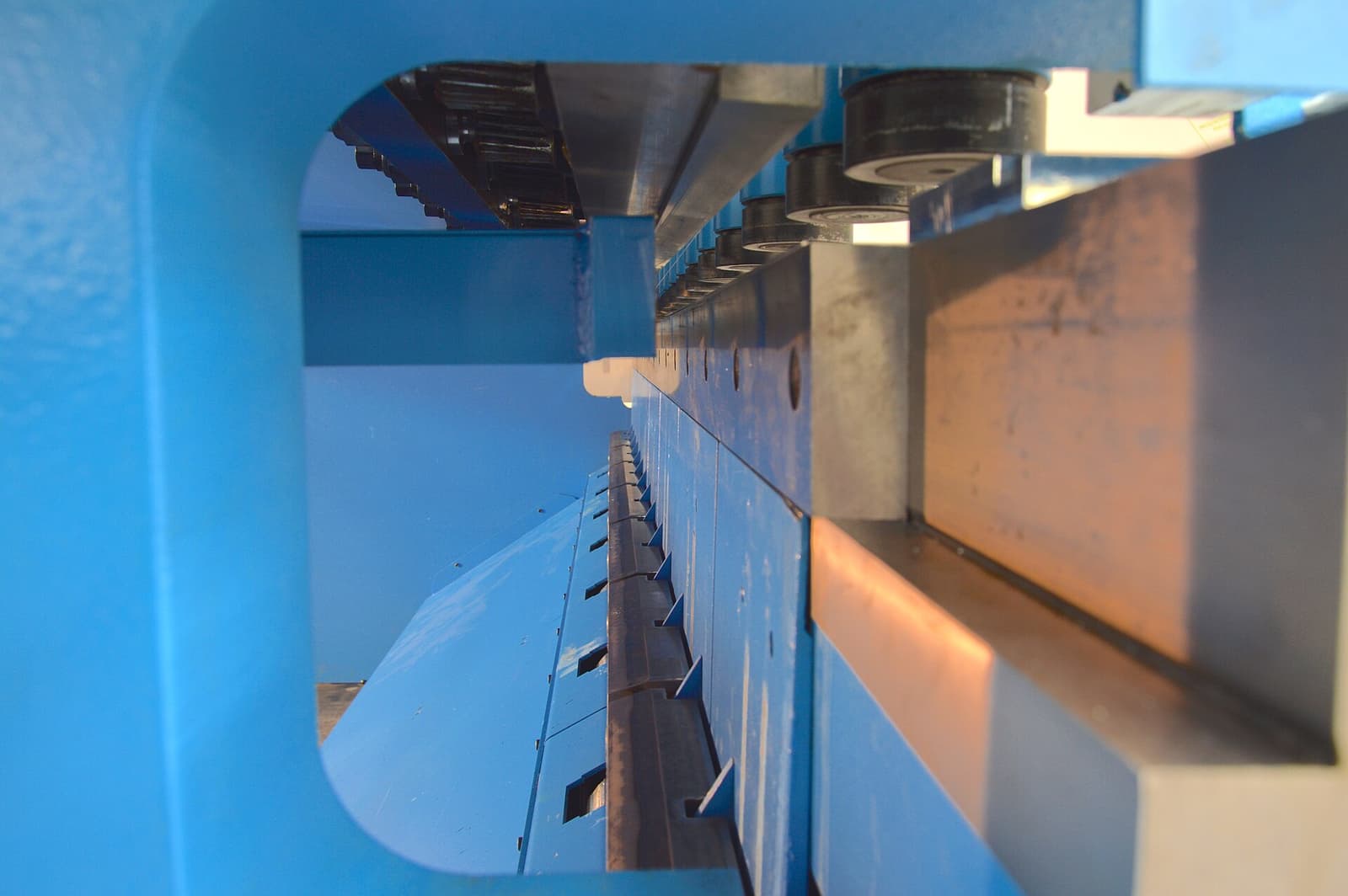

The Wayback homepage called the business Stainless Steel Melbourne Custom Cut. That was the product: not a mystical alloy, a saw and a folder. Full sheets or blanks. Folded angle, channel and Z. Trays. Barbecue lids. Coving. Corner guards. A collect-from-factory option in North Melbourne or Dandenong South.
This journal does not run that saw. It still speaks that language, because Australian trades still send the same emails: “304, No. 4, 1.2, 2120 × 620, grain long, two off.”
Custom-cut is a nest, a tolerance, and an edge. It is not a catalogue of live prices, and it is not a promise that every finish exists in every parent size.
What custom-cut includes
- Blanks from a parent sheet — see sheet sizes and thickness.
- Folds that turn a blank into angle, channel, Z, a tray or a lid.
- Edges that are sheared, sawn, laser-cut or waterjet-cut, not mill-extruded. They can show tool marks. If the edge is seen, say so, and budget a dress.
The old site’s small-print still applies: a production tolerance around ±2 mm, a radius at every fold, and a smallest internal leg the folder will actually do.
Australian merchant parents are typically 2400 × 1200 mm, with 3000 × 1500 and 3600 × 1500 on many racks depending on gauge, grade and finish. A custom blank cannot be larger than the parent you can actually buy. 316 No. 8 in 3 mm does not inherit the heroic size of 304 2B in 1.2 mm.
Guillotine, laser and waterjet
The historic custom-cut counter was a guillotine (shear) and a folder. That is still how most Australian kitchen blanks start. Laser and waterjet are the upgrade path when the nest is intricate, the hole is interior, or the edge will be seen.
| Process | What it is good at | Typical tolerance language | Edge character | When it is the wrong tool |
|---|---|---|---|---|
| Guillotine / shear | Straight blanks off a parent | Historic shop practice: ±2 mm | Sheared arris, possible bow on thin wide blanks | Interior holes, tight curves, feature edges |
| Laser | Nests, openings, cleaner profiles | Tighter than a shear if specified | Heat-affected edge; may need dress on cosmetic work | Thick plate beyond the machine, or a job that only needed a straight cut |
| Waterjet | Thick plate, no heat tint | Can be tight; still not a machined face unless asked | Frosted, slightly tapered kerf | Thin kitchen sheet where a shear is faster and kinder to the wallet |
| Site grinder / nibbler | Emergency trim | Worse than the shop | Burnt, scalloped, contaminated | Any visible polished edge — see cutting on site |
A laser cut is not a different alloy. It is a different edge and a different conversation about money. This journal will not invent that money. It will say: do not specify a waterjet art service if you meant a sheared rectangle.
The old catalogue’s honesty about the sheared edge still matters. A cut edge is not an extrusion. It can show tool marks. It can be very slightly out of square inside that ±2 mm window. If the blank has to drop into a stone cut-out with a 1 mm reveal, you are no longer in default custom-cut. You are in a machined or carefully dressed edge.
How to write a cut list
One line per part: quantity, alloy, finish, thickness, finished size, grain, filmed or not, which faces are seen, and whether the size is before or after fold.
For a channel, give internal dimensions and say so. For a lid, give internal plan size and whether corners are welded or folded. For a splashback, give grain direction and which long edge is the top.
Do not write “as per photo.” Photos lie about scale. Do not write “brushed stainless, heavy duty.” Write “304, No. 4, 1.5 mm, 2120 × 620, grain long, PVC on, two off.” Finishes and brushed versus polished exist so that sentence has numbers in it.
Grain, film and the visible face
Grain on No. 4 should run the same way across adjacent panels. A nest that rotates one blank to save 80 mm of parent will show under downlights. Film belongs on cosmetic sheet through the shear, the truck and as much of the install as the joint allows — protecting stainless during install.
2B often arrives unfilmed. That is fine for a hidden liner. It is not fine if the 2B face became the splashback because someone forgot to write No. 4.
Nesting and money
A 2400 × 1200 sheet does not contain four 1300 mm lengths. Nesting is how custom-cut stays cheaper than buying four parent sheets. Half-sheet options exist because they are a nesting strategy. Offcuts are a negotiation, not a right.
Developed widths for folds must fit the parent. A 1500-wide sheet will not give you a 1600 mm developed channel. The radius eats dimension. The old folder’s smallest internal leg — historically around 10 mm on thin angle — gets larger as thickness climbs. Ask the folder, not a mood board.
If you are cutting on the job instead of at a counter, read cutting stainless on site. Site cuts make swarf that rusts on the next bay’s 316. They also make a tolerance that is not ±2 mm.
Folds are a second product
A blank is a rectangle. A fold turns it into a section. The old homepage sold folded angle, channel, Z, trays, lids, coving and corner guards because that is what kitchens and fitouts actually install.
A folded 1.5 mm angle is a trim. A hot-rolled HRAP angle is a mill section. They share a letter. They do not share a capacity. The same warning sits on channel versus folded channel. Custom-cut is not a structural design service.
Corners on trays can be folded, welded, or folded and welded. Each looks different and costs a different amount of time. Write the corner. A barbecue lid with open folded corners will drip. A fully welded lid needs passivation if you care about the heat tint.
What custom-cut is not
It is not a waterjet art service unless you paid for a waterjet. It is not a guaranteed hairline joint. It is not a structural design. It is not a promise that 316 BA exists in 3600 × 1500 × 3 mm this week.
Specify the alloy with the cut. 304 versus 316 still applies after the shear. A perfect nest in the wrong alloy is still a coastal stain.
If the job is really “which metal,” step back to stainless versus galvanised versus aluminium. A shear that just cut galvanised will contaminate the next 316 blank if nobody cleaned it.
The custom-cut and sections hub is the family page for blanks and folds. The sheet, plate and finishes hub is where the parent faces live.